
The AI market is exploding from $196.63 billion in 2023 to a projected $1.81 trillion by 2030. In 2026, nearly every is rushing to build the next AI that will outcompete ChatGPT, however, the truth is, that’s not where the money really is.
If your goal is to find legitimate AI business opportunities that don’t require you to have a background in coding, then you are in the right place.
In this guide, we reveal where actual profits hide within the AI economy. The businesses shared here are practical and proven to generate from $85K to $150K every year for individuals. For companies, the ideas shared in this guide generate more than $50 million.
Who This Guide Is For:
- Entrepreneurs seeking AI side hustles with real revenue potential
- Contractors and service providers looking to capitalize on AI infrastructure growth
- Non-technical founders wanting to start an AI business without coding
- Anyone tired of AI hype and ready for actionable opportunities
Why Most AI Startups Fail
A lot of people are building AI startups but the brutal truth is that more than 70% of the will fail within three years. If you research, you will find out that so many AI companies are failing. Research has it that the average AI startup burns through $800K-$1.2M monthly, and most won’t make it past 18 months.
It is thus imperative to think differently if your goal is making money with AI. The real wealth within the AI industry is hiding in plain sight.
Let us now dive into where the actual money flows in AI. There are 5 tiers of the AI economy and in this guide we will rank them in regard to profit potential and accessibility.
Tier 1: Energy & Infrastructure
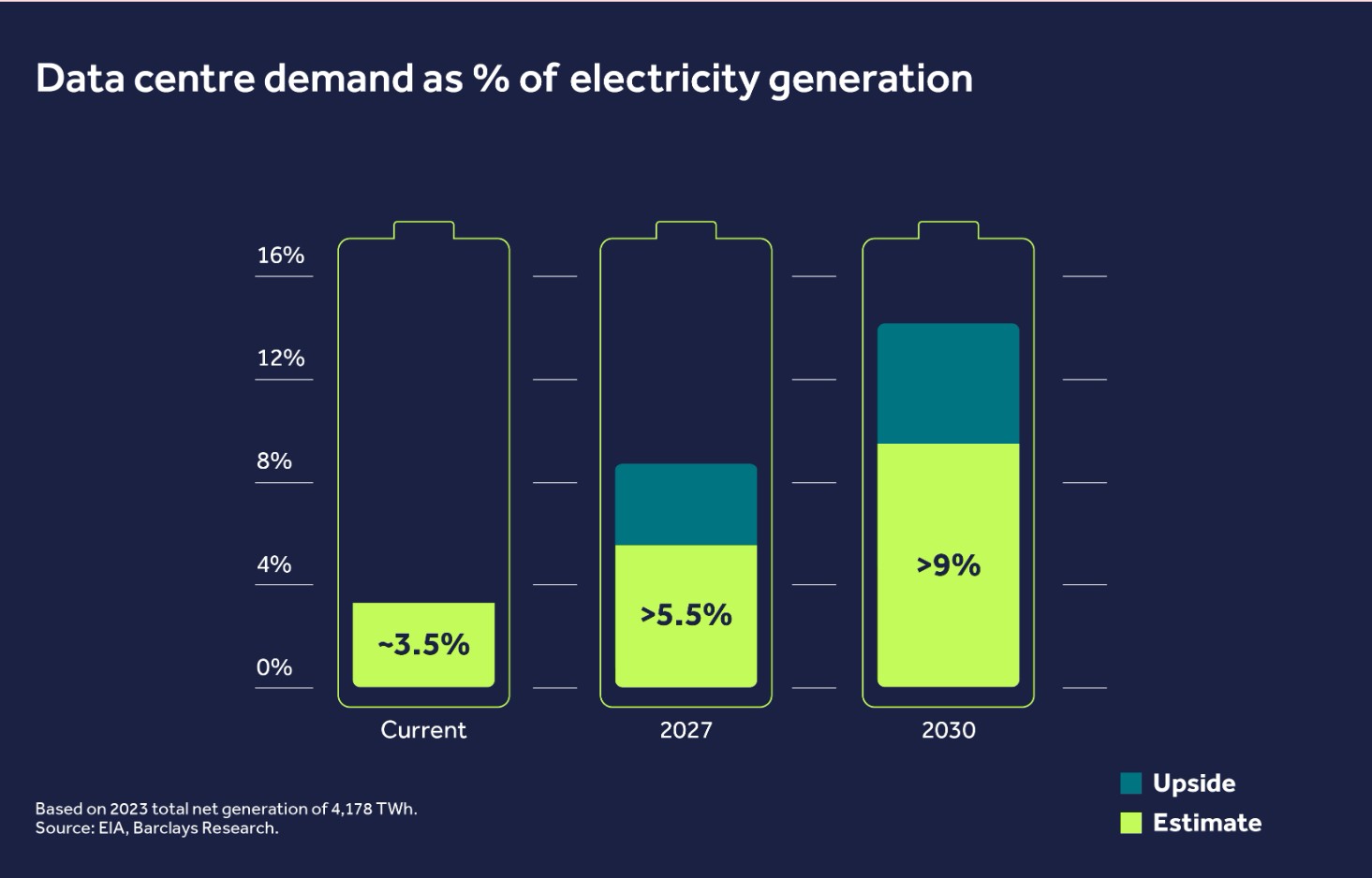
Start at the bottom of the stack. AI lives in the cloud, but the cloud needs power. Massive amounts of it. AI data centers now consume 4% of global electricity and that’s projected to hit 8% by 2030. We’re talking about facilities consuming more electricity than entire countries.
Microsoft, Google, and Amazon are investing over $150 billion combined in data center infrastructure through 2025. That’s not hyperbole but rather the actual math.
So who benefits from this? The ones who benefit are the companies building the infrastructure. A good example is Hanley Energy. This company is not flashy not is getting venture capital headlines, however, they’re building the actual facilities that power the entire AI economy.
If you don’t have a background in coding, this is still your play. Actually, this is one of the best AI business opportunities for non-technical founders.
What you should do is becoming a specialist contractor or open a company in the sector. Know your region. Build expertise around data center services. The big guys don’t want to send their teams cross-country for routine maintenance. Local contractors with data center expertise are billing $120-$250 an hour for work that’s absolutely critical.
Average earnings for data center contractors: $85K-$150K annually, with experienced specialists earning significantly more.
Companies like Promera Solutions figured this out early. In the beginning, Promera started by cleaning data centers. Now they’re the industry standard with over $50M in annual revenue. They do one thing obsessively well. That’s the template. Find a specialized service, master it, and scale within the AI infrastructure ecosystem.
Tier 2: Data Center Services: The $342B Market
The data center market hit $342 billion in 2024 and is projected to reach $622 billion by 2030. Investment jumped 51% year-over-year. Microsoft, Meta, Amazon are all pouring billions into physical infrastructure. But what about the plumbing? The roofing? The HVAC systems? The wiring? The local contractors that these AI empires literally cannot function without?
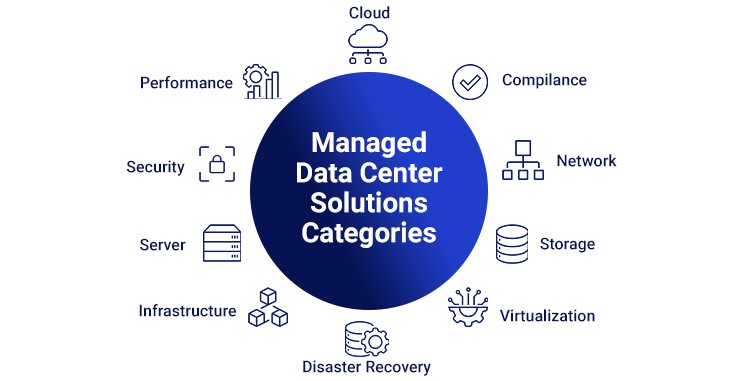
This is how you make money with AI without coding skills. It’s not sexy. It won’t get you on a podcast. But the people making money here? They’re making real money. JM Tech Group cleans data centers.
Sounds boring, right? Except they’re not just cleaning. They’re inspecting for fire hazards. Finding disconnected cables. Spotting problems that could cost millions in downtime. They went from janitor work to risk management consulting.
Guess who gets paid more? The consultant. This is AI infrastructure business at its finest—practical, profitable, and accessible.
Tier 3: Foundation Models
Then you’ve got Tier 3: foundation models. OpenAI, Anthropic, Google, X. These are the oil rigs. Big money. Long timelines. Uncertain returns. You and I aren’t investing there. Most people can’t compete at that level.
But here’s what matters for making money with AI: you don’t need to build the oil rig. You just need to sell something to the people running it.
The typical early-stage AI startup burns through $10 million in funding, which only gets you 20 months of runway. And during that time, you’re bleeding money because you have too many users and each one costs you cash.
OpenAI’s revenue jumped from $3.7 billion to $12.7 billion recently, but their training costs grow exponentially. Future models will cost billions to train.
This is why the infrastructure layer is where the real profit margins live. Infrastructure providers have 3-5x higher survival rates than application-layer startups.
Tier 4: AI Tools & Infrastructure Layer
Think of the plumbing layer of AI. APIs. Deployments. Orchestration tools. Frameworks. It’s like AWS for AI. Not sexy. Neither is Stripe or MongoDB. But look at how much money those companies are worth. Multi-billion dollar businesses because they make everything else work.
This tier offers legitimate AI business ideas for technical founders who want to build picks-and-shovels rather than panning for gold.
There’s something weird happening though. The big tech companies are all sleeping with each other. Nvidia and AMD invest in companies they sell to. Anthropic uses Amazon Web Services.
Amazon is an investor in Anthropic. Microsoft is invested in OpenAI and counts OpenAI as a customer. This is called circular financing or rather circular AI economy. It clouds actual demand. Are they making all that revenue or just paying each other?
Tier 5: AI Applications
Tier 5 is AI-native applications. This is where most people are playing, and where 78% fail within three years. Building without a business model. Chasing users instead of revenue. Most won’t survive. But if you focus on AI business opportunities that replace cost centers and drive real productivity, you’ve got a shot at profitability.
The problem? Tools like Replit and Cursor let you play startup founder for a weekend. You build something that looks legit. You feel like a genius. Maybe you get a few users. Cool story. But when it’s time to actually scale? When the demo breaks at 2 a.m. and customers are screaming? When you need to connect payment processors, databases, APIs, all the back-end plumbing that makes real businesses work? You’re cooked.
Here’s what nobody talks about: if you actually win at this level, big tech becomes your biggest threat. Not because they’ll copy you. They’ll steal your team. Meta slides into your senior engineers’ DMs with a $2 million package. Who says no to that?
How to Start Your AI Business in 2026: Practical Steps
So what’s the move if you want to make money with AI?

First things first, stop waiting and procrastinating. 2026 is time to start owning. You should be on the move so that by the time other people feel safe to use AI and have stopped fearing it, you will have already made money.
Starting today, you should use AI to speed up ownership because AI is a tool like any other and its use comes with its ability to automate and multiply.
The biggest AI opportunities as you have realized comes with being an early adopter. Right now, 72% of businesses are using AI, this is a 35% increase from 2023. However, many businesses are still figuring it out. Research shows that some workers are spending more time correcting AI output than doing actual work and there we find the first gap which translates to an opportunity.
If you can get ahead of these trends, you’re going to make money with AI faster than the competition. The real benefits come in the form of AI agents and not generative AI. Why? Because Agentic AI can plan and understand goals.
Additionally, they can make decisions without constant human interventions. Take for example, most of the Apps and softwares that we at Madeesy Solutions have made have been largely through the help of agentic AI, the likes of Microsoft copilot, AutoGen, Unity AI Assistant and many others. Based on forecast, the AI agent market is projected to reach $47 billion by 2028. Eventually this means having a little team of digital workers handling tasks for you around the clock.
The key to making money in the AI age isn’t letting AI think for you. It’s making it think with you. Most people let AI copy what’s already out there. You be original. You move fast. AI can only generate, but you can direct.
Final Thoughts: Time in the Market Beats Timing the Market
Don’t try to time the AI market. Start as early as yesterday. It’s time in the market that counts. The infrastructure is being built right now and the opportunities are here today. Start learning, start building relationships, start positioning yourself in the AI economy while there’s still room to establish yourself as an expert.
Leave a Reply