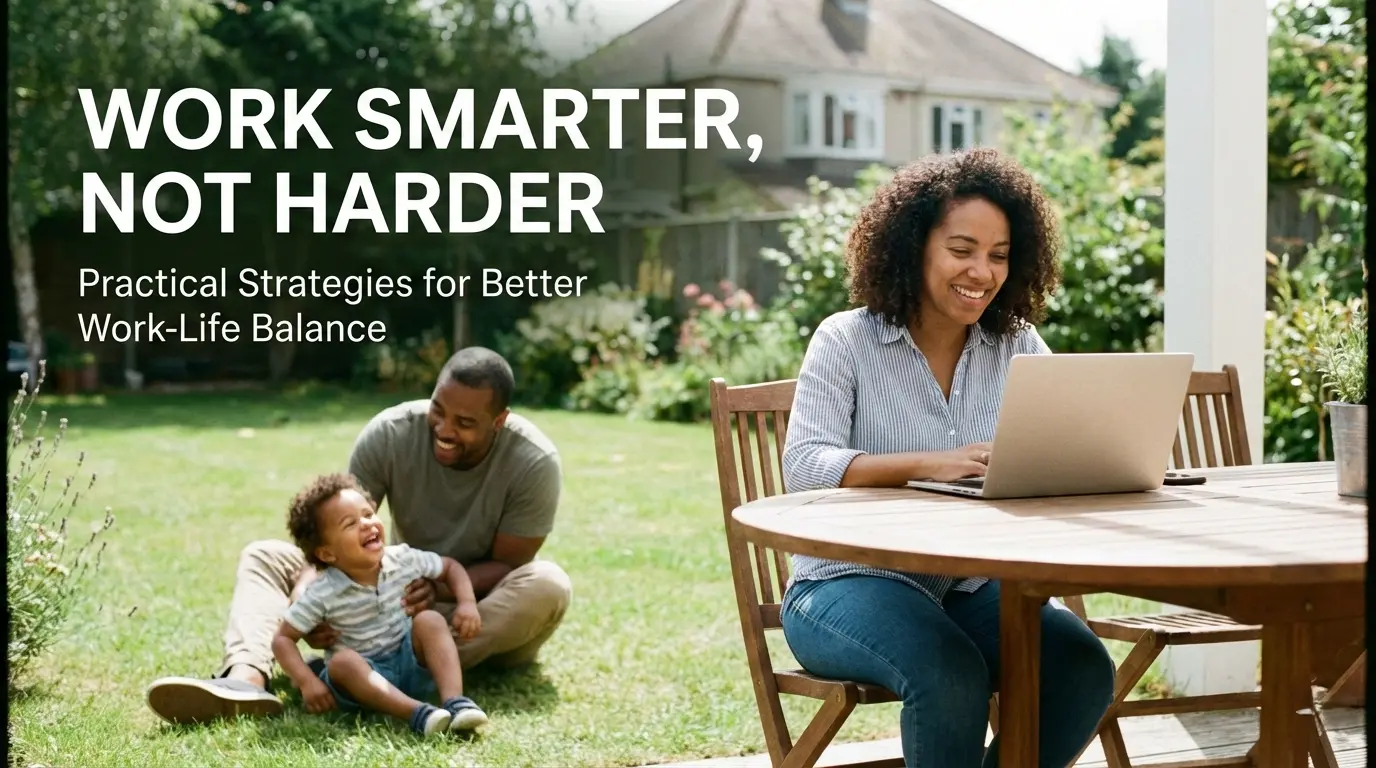
You are in this life to live. However, in order to achieve the kind of life that you perceive as good, then you have to work for it.
Many times, we get so consumed in working to chase the desired life to a point we forget that our primary goal should be living.
It is for this reason that work-life balance is crucial.
So, what exactly is work-life balance?
Work-Life Balance Explained
Work-life balance can be defined as how you divide your time and energy between work and the parts of life that matter outside of it, such as family, relationships, rest, health, and personal interests.
In simple terms, it is the space between earning a living and actually living your life.
When work takes up more time, focus, or emotional energy than it should, less of it is left for your responsibilities, passions, and the people you care about. Over time, this imbalance affects not just your schedule, but also how you feel, think, and relate to others.
Most people want to achieve a healthier balance between their professional life and their personal life. In reality, this is not always easy. Sometimes, a demanding job provides financial stability or security for a family. Other times, that same job slowly drains your mental health, leaving you exhausted and disconnected in your personal relationships.
Work-life balance, therefore, is not about choosing work or life. It is about finding a way for both to coexist without one constantly erasing the other.
Why Achieving Work-Life Balance Feels Impossible
For most people, the problem is not a lack of discipline or poor time management.
It is volume.
More emails, more messages, more deadlines, and more tasks that repeat themselves every single day. Work has quietly expanded into evenings, weekends, and moments that were once reserved for rest.
As long as work continues to demand constant attention, achieving balance becomes less about choice and more about survival.
This is where automation becomes relevant.
Importance of work-life balance
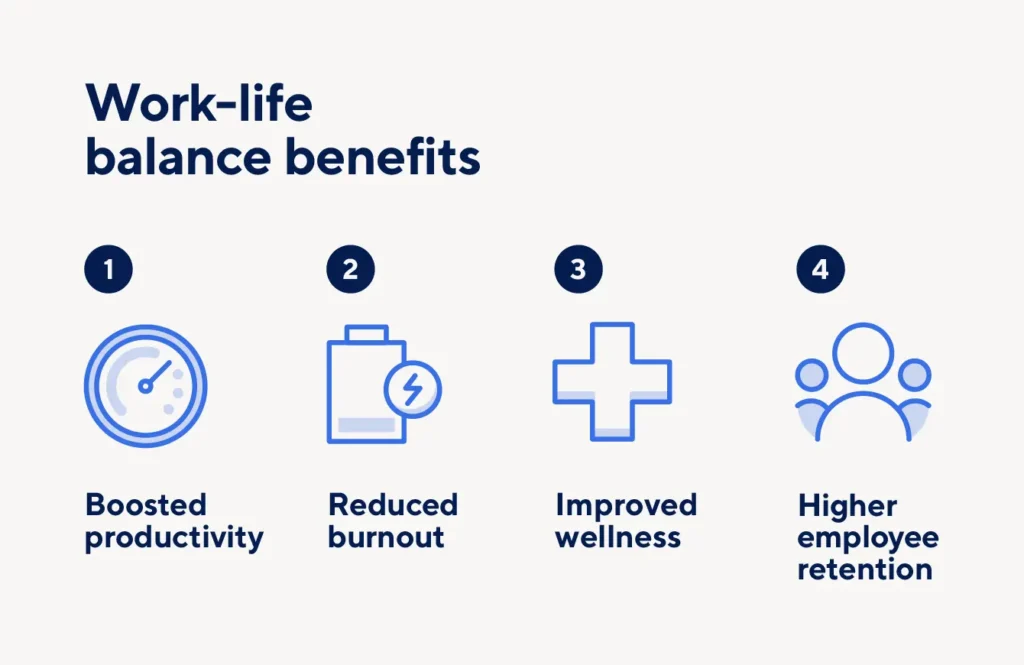
Improving your work-life balance can improve your overall well-being, including your physical, emotional, and mental health.
Research from the Government Accountability Office (GAO) reveals that working long hours can lead to such serious health issues as stroke, coronary heart disease, type 2 diabetes, and increased alcohol consumption, although more research is necessary to determine the precise link between long work hours and negative health outcomes.
Unfortunately, as these conditions arise, they can also exacerbate our work-life issues, leading to burnout and other negative repercussions.
While employers and employees might associate long working hours with increased productivity, many researchers say otherwise. Studies have found that after workers hit a certain number of hours, their cognitive abilities decline. This decrease in mental acuity, focus, and decision-making leads to a decline in effectiveness. Achieving a healthy work-life balance can reduce stress and increase overall productivity.
How Automation Can Improve Your Work-Life Balance
Automation is the use of tools and systems to handle repetitive, time-consuming tasks that do not require constant human decision-making.
Instead of spending hours doing the same work manually, those tasks are delegated to software or simple systems that run quietly in the background.
The goal of automation is not laziness or avoidance of work. It is efficiency.
By reducing the time and mental energy spent on routine tasks, automation creates space. Space to rest. Space to think clearly. Space to focus on work that actually matters, and life that exists outside of it. For small business owners, insights from automation for SMEs show how even simple systems can save time, reduce repetitive work, and give more breathing room in a busy day.
When fewer hours are wasted on repetitive work, it becomes easier to log off without guilt. It becomes easier to be present with family, pursue personal interests, or simply do nothing without feeling behind.
In this way, automation does not replace work. It restores balance.
Why Automation Is No Longer Optional in Achieving Work-Life Balance
Without automation, work tends to spill into personal time.
With automation, boundaries become easier to maintain.
The difference is not effort. It is structure.
People who use automation are not necessarily working less. They are working smarter, with fewer interruptions and less friction, allowing work to stay where it belongs.
Real-Life Examples of Automation at Work
Automation often sounds like something complex or expensive. In reality, it usually starts with small changes that remove repetitive work from your day.
For employees, this can be as simple as automating routine emails or reports. Instead of manually sending the same updates every week, systems can generate and send them automatically. The work still gets done, but your time and attention are freed for tasks that actually require thinking.
Scheduling is another area where automation makes a noticeable difference. Calendar tools that automatically set meetings, send reminders, and follow up reduce back-and-forth communication. Fewer messages mean fewer interruptions, and fewer interruptions make it easier to focus during work hours and disconnect afterward.
For SME owners, automation often plays an even bigger role. Daily sales tracking, stock updates, and performance summaries are tasks that quietly consume evenings when handled manually. Using a simple sales tracking system like SalesTracker by Madeesy allows sales and inventory to be recorded automatically, giving business owners a clear view of performance without staying late to reconcile numbers. The work continues, even when you step away.
Even small utilities matter. Something as basic as converting documents or images for work can interrupt focus more than we realize. Tools like File Converter by Madeesy, which handle file conversions instantly without extra steps, remove friction from everyday tasks. These small time savings add up over weeks and months.
The impact of automation is rarely dramatic overnight. Instead, it shows up gradually. Ten minutes saved here, an hour there, fewer late nights, fewer unfinished personal plans. Over time, these small gains create real space for rest, relationships, and balance.
Automation and Mental Health
One of the least talked about benefits of automation is its impact on mental health.
When fewer tasks demand constant attention, the mind becomes quieter. Automation reduces cognitive load by handling routine work that would otherwise sit in the back of your head, waiting to be done or remembered.
With fewer follow-ups, reminders, and small decisions pulling at your attention, it becomes easier to stay present during work hours. More importantly, it becomes easier to mentally switch off once the workday ends.
For many people, stress does not come from hard work. It comes from unfinished work.
Automation helps close those mental loops by ensuring tasks continue running even when you step away. Over time, this creates clearer boundaries between work and rest. Work stays at work. Rest feels like rest, not a pause filled with guilt.
How to Start Without Overcomplicating It
Getting started with automation does not require a complete overhaul of how you work.
The simplest approach is to identify one repetitive task that drains your time or energy and start there. It could be reporting, scheduling, follow-ups, sales tracking, or document handling.
There is no need to automate everything at once. Trying to do too much too quickly often creates more stress, not less.
The goal is not perfection. It is relief.
By building systems slowly, you give yourself time to adjust. Each small improvement creates momentum, and over time, these systems begin to support your work instead of quietly consuming your life.
Closing Reflection: Work Should Support Life
You are in this life to live.
Work is important, but it is not the destination. It is the means through which you build stability, purpose, and opportunity.
When work begins to consume everything else, balance is lost. Automation offers a way to restore that balance, not by working less, but by working with intention.
By removing unnecessary effort, you create room for what matters now. Because life does not start later. It is happening already.
Leave a Reply